Share this
Written By
Folake Ajao

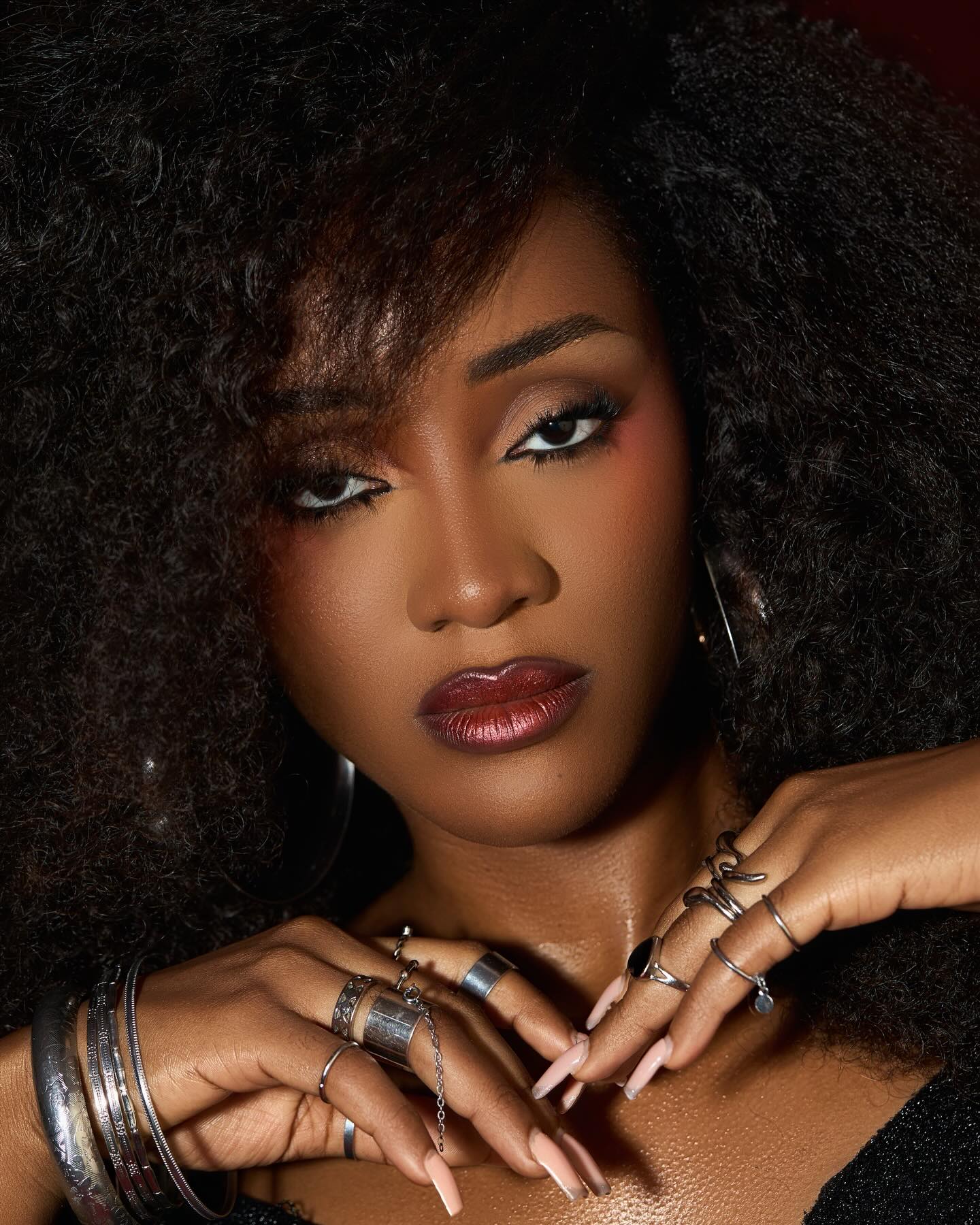
There is a particular kind of clarity that comes from leaving everything familiar behind. For Nelly Baradi, that clarity began in a small compound in Sapele, where music first felt like instinct rather than ambition. Long before studios or industry recognition, her voice carried through shared spaces where neighbours could hear everything. It was there that her relationship with music took shape. “I started doing music since I was little,” she recalls. “I would always sing every song I hear.”
Growing up in Delta State, her world was defined by proximity. Family, neighbours, church, and television all lived within reach. Music filtered in through every available channel. It came from TV jingles, film soundtracks, and the steady rhythm of songs playing in the background of daily life. She remembers sitting in front of the television and singing along to everything she heard. “My ears were so full of music from TV, from advertisements and all of that,” she says. It was not structured practice. It was repetition driven by love.
That environment made her voice visible early. In a face me I face you compound, there is no distance between expression and audience. People notice and they respond. “My neighbours would always talk about it,” she says. “They would say I sing nice every single day.” Over time, church became the first structured space where that instinct could grow into something more intentional.
Her early musical grounding came through the choir. It introduced discipline, harmony, and a sense of collective performance. It also led to a moment that would change how she understood her own voice. On a visit to a studio with friends, she recorded a song for the first time. Hearing herself played back through speakers created distance between the act and the result. “That was my first time of ever going to a studio session,” she says. “They played the song out for me and I fell in love with what I was hearing.”
That moment reframed music as something she could build and share beyond a single performance. From that point, the idea of pursuing it seriously stopped feeling distant.
The next shift required leaving home. Sapele, as she describes it, is small in both scale and opportunity. Her ambitions were growing in ways that the environment could not support. “Everything that was coming to my head was just bigger than me,” she says. “I knew I could not achieve any of this living in that place.” The decision to move to Lagos came from that realisation.
It was not easy. Her family was rooted in Delta State, and the idea of relocating for music did not come with immediate approval. She made the decision anyway. Telling her mother was one step. Telling her father felt harder, so she left a letter instead. “I didn’t have the courage to tell him,” she admits. “So I dropped a letter.”
Lagos reshaped everything. It introduced scale, urgency, and competition. It also forced her to build connections from scratch. One of her earliest tools was social media. Posting covers on Instagram became a way to reach beyond physical limitations. “Instagram was another tool for me that really helped me,” she says.
Through those connections, she found her way into live performance spaces. Working with a live band exposed her to the practical side of music as a profession. It meant rehearsals, events, and adapting to different performance contexts. “We go for shows, events and all of that,” she says. That experience expanded when she encountered bands that worked directly with recording artists.
That transition introduced her to the role of a background vocalist. It required precision, listening, and the ability to support someone else’s vision. It was in this space that a key connection happened.
A message from Seyi Vibez changed the trajectory of her work. It came through Instagram, a direct result of the visibility she had built. “He just texted me randomly out of the blue,” she says. “He said there’s something he wants me to do.” He was looking for a female voice to complement a track and believed she was the right fit.
The collaboration was straightforward, but the impact extended beyond that session. “That’s how the whole backup thing just came about,” she explains. One appearance led to another. Other artists heard her contributions and began reaching out. “They would say they like what I did and they want me to do it for them.”
Even as she built a reputation as a background vocalist, she was developing her own material. Studio sessions were not limited to collaborative work. She used those moments to connect with producers and record personal songs. “I had my songs on ground,” she says. “I was recording.” The decision to hold back from releasing immediately was deliberate. “I was thinking maybe it wasn’t the right time.”
Her influences reflect a blend of local and global sounds. Artists like Chidinma and Tiwa Savage shaped her understanding of contemporary Nigerian music, while Beyoncé and Destiny’s Child offered a broader perspective on performance. “I listened to Chidinma a lot,” she says. “I listened to Tiwa and Beyoncé.”
The transition from supporting roles to a solo career was gradual. Being discovered by Tronic through an Instagram cover reinforced the value of consistency. “They found me on Instagram through a cover I made,” she says. By the time that opportunity arrived, she already had a catalogue of unreleased work.
Risk remains a defining part of her story. Moving to Lagos without a support system was the first major step. “That was the number one risk,” she says. “Not knowing anybody, not even knowing where to start from.” That decision continues to shape how she approaches her career.
Her music is built around emotional connection. She is clear about what she wants listeners to experience. “When people listen to my song, they should feel like they have somebody speaking for them,” she explains. The goal is to offer language for feelings that are difficult to express. “You know how it feels when you are short of words,” she adds. “I want my music to help pass that message.”
This intention carries into her creative process. She does not begin with lyrics. Instead, she starts with melody. Hearing a beat triggers an immediate response. “Once I listen to the beat, melodies come,” she says. “I record them on my phone.” Lyrics come later, built around that emotional direction.
Outside of music, her routine is simple. When she is not working, she spends time online researching or watching films. “I was actually seeing a movie before I joined this meeting,” she says. It is a balance that allows her to reset without stepping too far away from creativity.
That next phase is already in motion. She is preparing to release new music, starting with a series of singles that will lead into a larger project. “I have projects that I want everyone to look forward to,” she says. The process is measured, but the urgency is there. “I wish I could just bundle everything and put it out now,” she admits, “but it’s coming.”
Nelly Baradi’s story is shaped by decisions that required both courage and patience. From singing in a small compound to recording in professional studios, the through line remains consistent. She listens, she adapts, and she creates. The voice that once carried across a small compound now reaches a wider audience, but the core remains the same. It is rooted in feeling, in connection, and in the belief that music can say what words alone cannot.
© 2026 Afreoriginals.